Series № 6 of 7 Acreage Kitchens
Winter Shutdown for a Viking Outdoor Refrigerator
An outdoor refrigerator is built for the patio, not for every night of the year. Viking's guide for its outdoor models names the point at which the unit should come off for the season, and gives a short list for putting it away properly.
Written by
Sofia Alarcon
- Role
- Service technician — refrigeration and defrost
- In the trade
- 15 years in the trade
Why switch a refrigerator off just because it is cold outside?
It sounds backwards, since the air outside is doing half the job already. But outdoor refrigerators are built to cope with patio weather, not with all of it, and Viking draws a firm line.
Its guide for the outdoor models says it is time to winterize when the daily low temperature is at or below 38°F (3.3°C). It also says that operating the unit in air colder than that will void the warranty. That settles the question more firmly than any argument about how refrigerators behave in the cold: past that point, keeping it running is a risk you carry alone.
Card 1 of 7 · (425) 321-3414
When should it come off in a Woodinville autumn?
Go by the overnight lows, not the calendar. Viking’s figure is a daily low, so a mild afternoon changes nothing if the nights keep dipping to 38°F or under.
A thermometer that records the lowest reading, hung near the island, tells you what the patio itself reaches, and that is the number that matters. A patio in a low spot can sit colder overnight than the forecast for town.
Plan the shutdown for a dry day. Part of the job is leaving the cabinet open until it has dried out, and that goes faster when it is not raining into the patio.
Card 2 of 7 · (425) 321-3414
What are the shutdown steps?
Viking’s list, in the order its guide gives it:
- Turn the unit off and take out all the contents.
- If necessary, move it to reach the rear; unplug it, and switch its outlet off for the season.
- Remove the front toe-grille, vacuum beneath it, clean the grille and refit it.
- Remove the rear access cover, clean the machine compartment and the cover, and refit it.
- Wipe the interior with an anti-bacterial cleaner, rinse, and leave the door open until it is completely dry.
- Clean the door gasket, and the outside with a stainless-steel cleaner.
- Replace corroded mounting hardware; car wax on the outside is optional.
Our caution: on a built-in unit, the pull-out and the rear cover can wait for someone with the right tools.
Card 3 of 7 · (425) 321-3414
Why leave the door open, and then close it?
A cabinet shut while damp spends the winter growing mildew and smells, and the door gasket is where they show first. Leaving the door open lets every surface dry.
Closing it again once it is dry matters just as much. An open refrigerator on a winter patio collects leaves and needles, and it offers mice a sheltered, empty box beside the grill. Check the defrost drain pan as you finish; if water is standing in it, the guide has you sponge it out.
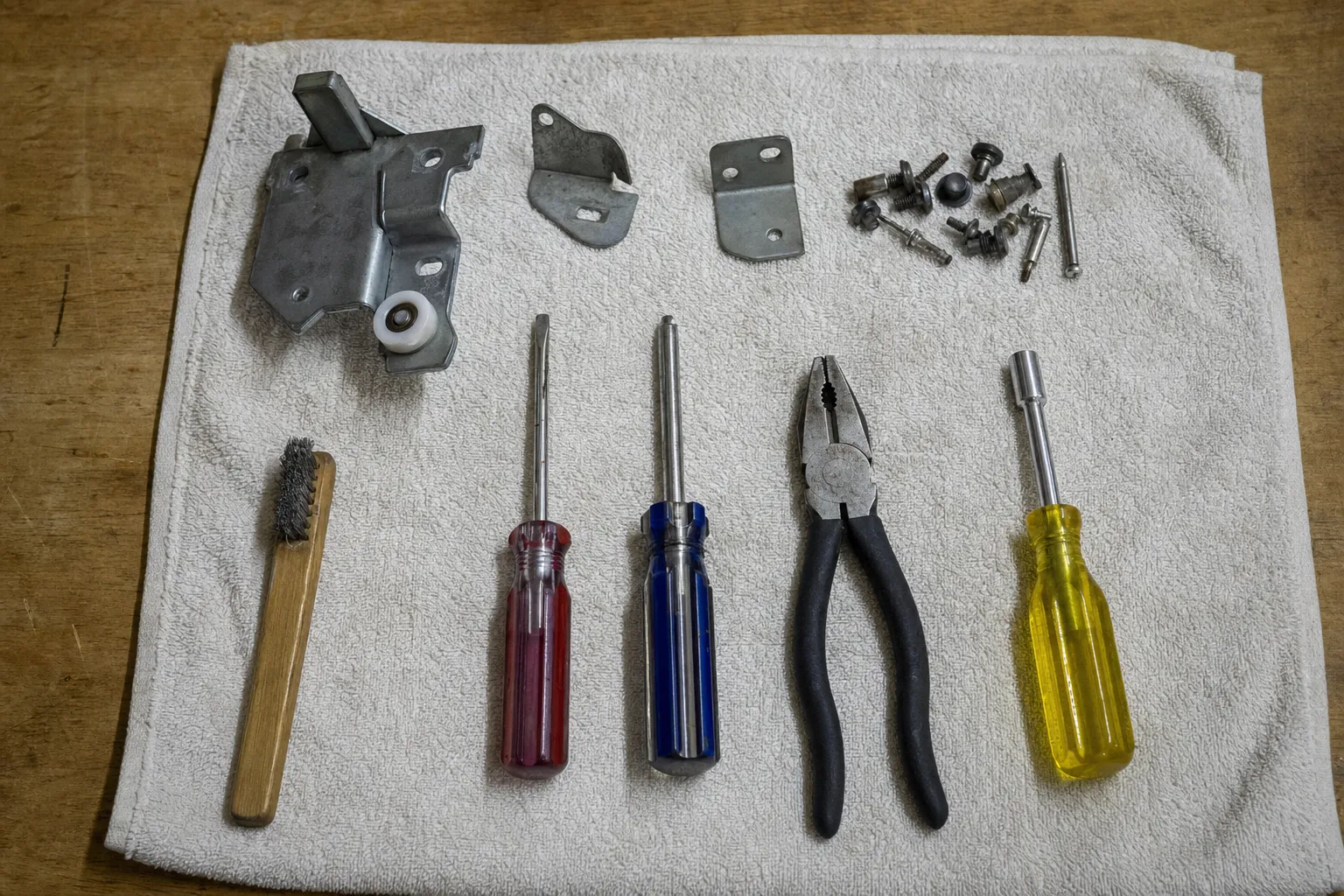
Apart from the two covers, nothing here needs more than a brush, a vacuum and a cloth.
Card 4 of 7 · (425) 321-3414
What about an ice maker or a water line in the island?
The Viking outdoor refrigerator guides we read say nothing about draining water, because the refrigerator itself takes no water connection.
If your island also holds a separate ice machine or a sink, those are different appliances with their own winter instructions. Water left standing in a line or valve that freezes can split it, and the damage often shows only when the water goes back on in spring. Close the supply to that appliance at its valve and follow its own guide for draining, not this one.
Card 5 of 7 · (425) 321-3414
How do you bring it back in spring?
Wait until the overnight lows are staying above 38°F. Before power goes back on, clean the front grille and the rear access area again; a winter of needles, leaves and webs gathers there, and Viking’s guide asks for the grille openings to be kept clear so the unit can move air.
Look over the cord and the outlet, and plug the refrigerator straight into its own outlet. Viking rules out extension cords, and the guide calls for a grounded, dedicated 15-amp circuit.
Then switch on, set the temperature, and let the cabinet reach its set point before you load it, as the guide asks.
Card 6 of 7 · (425) 321-3414
When does a spring restart need us?
Stop if it runs but the inside stays warm after a fair wait, if it hums without starting, or if it clicks on and off every few minutes. Stop, too, if it trips its breaker or GFCI, or if the cord or outlet shows any scorching.
Those point at a starting, fan or sealed-system fault. A refrigerant circuit is never opened by an owner, and a scorched outlet is a job for the circuit before the appliance. When you book, say how long the unit stood and whether it was winterized, because the answer changes where the diagnosis begins.
Card 7 of 7 · (425) 321-3414
Follow-ups
Can I leave it running if it is empty and the nights are only just cold?
Viking's guide says no. Once the daily low is at or below 38°F the unit should be winterized, and operating it in colder air than that voids the warranty, empty or not. If it has already run through a few frosts and now behaves oddly, Woodinville Viking Repair, (425) 321-3414, can look at it before it goes back into use.
It ran outside all winter. What should I check before relying on it?
Clean the front grille and the rear access area, look over the cord and outlet, wash the inside and the door gasket, then switch it on and let it reach its set temperature before loading. If it never gets there, runs without stopping or trips the circuit, ring Woodinville Viking Repair on (425) 321-3414 and mention the winter outdoors.
Do I need a technician to winterize it?
Mostly not. Off, empty, unplugged, cleaned inside and dried with the door open is owner work, and nothing in Viking's list involves wiring or refrigerant. Its list does include taking off the toe-grille and the rear access cover; on a built-in unit, that part can wait for someone with the tools. Woodinville Viking Repair, (425) 321-3414.